Views: 261119 Author: Site Editor Publish Time: 2026-11-19 Origin: Site
If you manufacture thin-wall GRC/GFRC architectural panels, decorative facade moldings, or lightweight cladding and face high scrap rates from corner chipping during demolding or micro-cracking during transport, this focused FAQ guide explains how to reinforce your precast matrix effectively.
Why do thin-wall GRC panels frequently chip at corners and crack during handling?
Thin-wall GRC cladding (typically 12 mm to 20 mm thick) has a high surface-area-to-thickness ratio. Traditional cement matrices without optimized reinforcement lack tensile and flexural ductility, leading to common production failures:
Demolding Stress: Complex molds with sharp corners and deep undercuts generate high localized shear stresses when pulled from the mold.
Handling & Transport Vibration: Dynamic flexural loads during lifting, crating, and road transit cause brittle unreinforced edges to fracture.
Drying Shrinkage: Rapid moisture loss in thin sections triggers early plastic shrinkage micro-cracks that later develop into visible edge fractures.
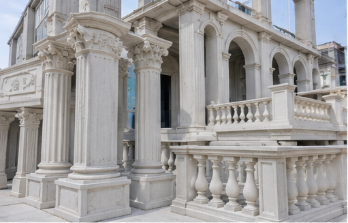
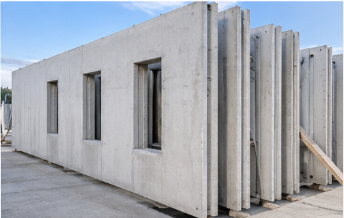
How does YUNIU AR Chopped Strand reinforcement prevent edge chipping in precast GRC?
YUNIU Alkali-Resistant (AR) Chopped Strands act as a multi-directional internal micro-dowel system throughout the slurry:
Dense 3D Fiber Bridging: Millions of dispersed high-strength filaments interlock near panel edges, absorbing localized impact and preventing micro-cracks from propagating into catastrophic chips.
Superior Post-Crack Ductility: Rather than failing abruptly when peak stress is reached, fiber-reinforced matrix sections exhibit high energy absorption, preserving fragile decorative profiles.
Seamless Corner Flow: High strand integrity allows wet premix slurries to flow smoothly into tight mold corners and narrow returns without snagging or leaving fiber-starved resin pockets.
How does YUNIU AR fiber boost both the Limit of Proportionality (LOP) and Modulus of Rupture (MOR)?
In structural GRC engineering, panel performance is measured by LOP (the point where the cement matrix begins to micro-crack) and MOR (the ultimate breaking strength):
Matrix Micro-Crack Inhibition: Fine filament distribution increases initial elastic resistance against micro-cracking, helping maintain a higher LOP under wind and thermal loads.
High Ultimate Tensile Load-Bearing (MOR): Because high-zirconia YUNIU AR glass fibers possess an elastic modulus significantly higher than the cured cement matrix, they carry the tensile load after matrix yielding, substantially elevating the ultimate flexural strength (MOR).
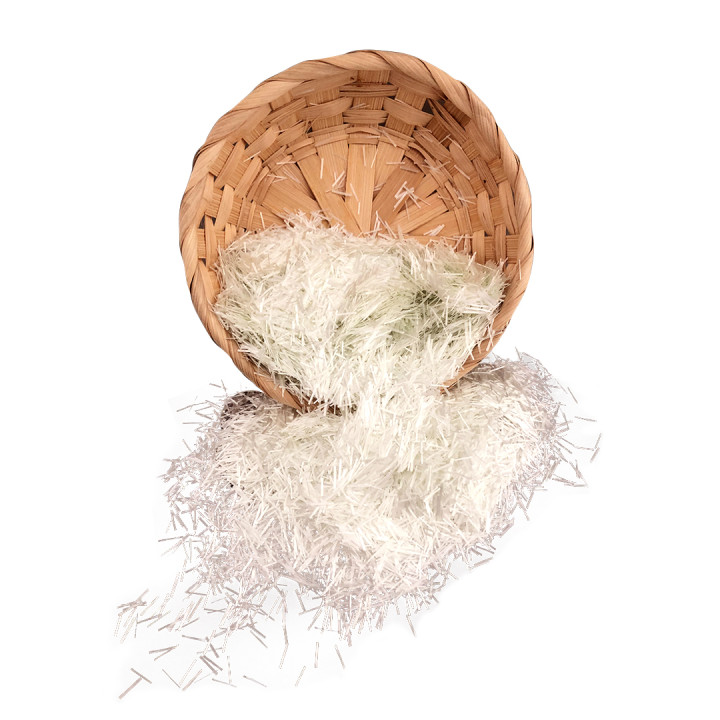
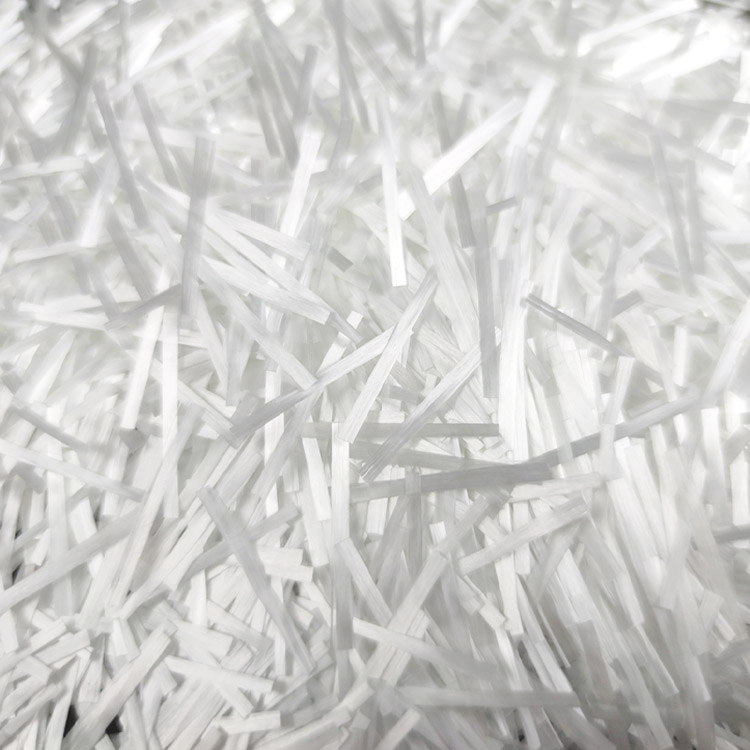
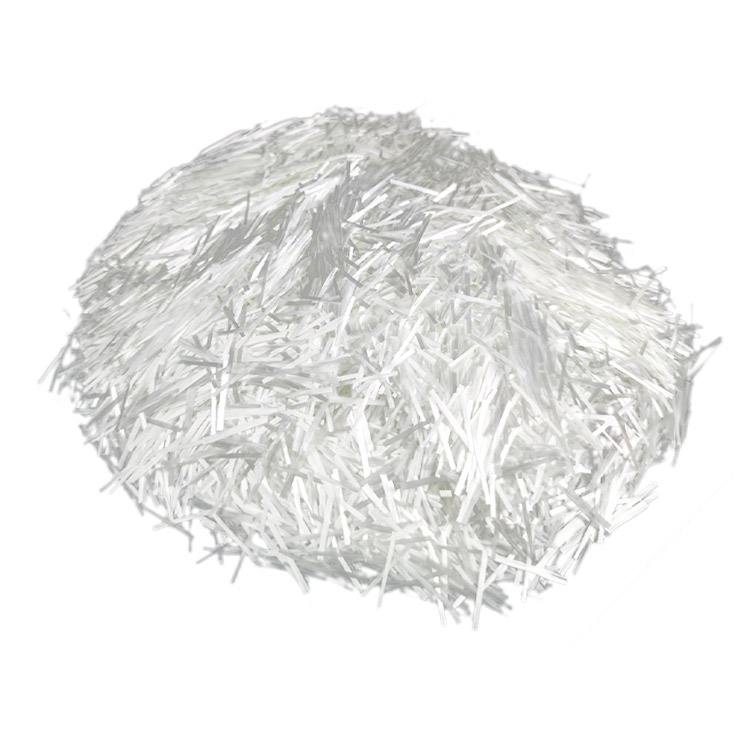
Which fiber length and dosage should I use for intricate details versus structural backing layers?
Tailoring the fiber cut length to specific panel zones maximizes both surface definition and flexural toughness:
6 mm AR Strands (Detail & Face Coats): Best for decorative mist coats, sharp corners, and intricate relief patterns where longer fibers might cause surface blemishes or bridging across narrow gaps.
12 mm AR Strands (Structural Backing Layers): The global standard for GRC premix pouring and backer layers, providing optimal aspect ratio for tensile load transfer and impact toughness.
Recommended Dosage Guidelines:
Standard Decorative Profiles: 2.0% to 2.5% by total dry mix weight.
High-Load Structural Cladding: 3.0% to 3.5% by total dry mix weight (adjusted based on specific aggregate grading and flowability tests).
How do I ensure complete fiber dispersion in the mixer without creating lumps or reducing workability?
Achieving uniform fiber distribution without damaging filament integrity requires proper batching discipline: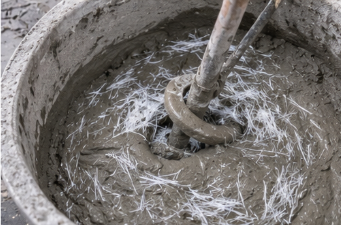
Sequential Addition: Mix sand, cement, water, and polymer/admixtures first until a completely smooth, lump-free slurry is formed.
Gradual Fiber Introduction: Feed YUNIU AR Chopped Strands slowly into the vortex of the operating mixer over a 1 to 2 minute window.
Controlled Final Mixing: Mix for an additional 1 to 2 minutes after all strands are added. Avoid prolonged high-shear over-mixing, which can break bundles prematurely and reduce composite toughness.
Summary
Preventing corner chipping and ensuring high flexural durability in thin-wall GRC precast panels relies on three key practices: utilizing high-zirconia AR glass fibers that maintain long-term strength against cement alkali, choosing the right fiber length (6mm for crisp edges and 12mm for structural backing), and following a controlled mixing sequence to guarantee lump-free 3D dispersion. YUNIU AR Chopped Strands provide precast facade fabricators with a reliable reinforcement solution that lowers demolding scrap, withstands transit handling, and delivers crisp, crack-free architectural finishes.
#ARGlassFibersforGRCPanels #Anti-ChippingGFRCReinforcement #Thin-WallPrecastConcreteFibers #HighFlexuralStrengthGRCFibers #YUNIUARChoppedStrandsFactory